Furnace Repair in Cornell, WI
Frigid winter drafts make malfunctioning heating systems an immediate emergency. Experienced heating technicians troubleshoot cycling limit switches, unresponsive thermostats, faulty gas valves, and cracked igniters in Cornell to restore household comfort.
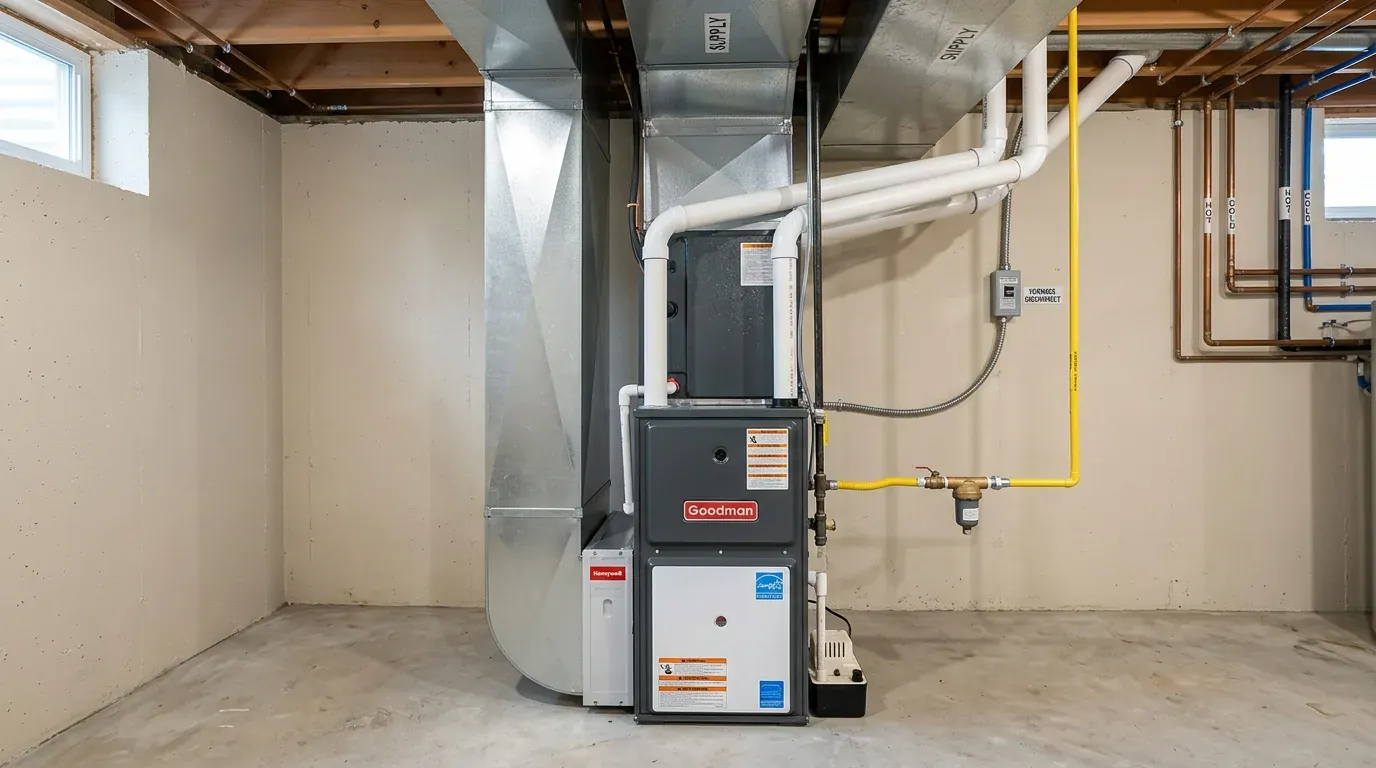
Residential Furnace Repair in Cornell
High-efficiency condensing furnaces provide exceptional fuel economy during long winter heating seasons in Cornell, but their complex secondary heat exchangers require dedicated maintenance. Extracting maximum heat from combustion gases creates acidic water condensate that must drain freely through internal collection traps, vinyl tubing, and neutralizer basins. A single clogged drain line can halt the entire heating sequence.
Algae buildup, mineral scale, or frozen drain discharge lines cause condensate water to back up into the secondary heat exchanger housing, tripping the internal pressure switches or water float sensors. When these safety switches detect standing water, the ignition control board instantly locks out the gas valve to prevent water from flooding the electrical compartment or corroding the blower assembly.
Technicians clear calcified drain traps, test condensate pump check valves, and verify clean flue gas venting through PVC exhaust pipes across Cornell. Restoring clear drainage ensures high-efficiency furnaces achieve their rated AFUE efficiency while operating smoothly through deep winter freezes, preventing costly water leaks and emergency shutdowns.
Heating & Furnace Services in Cornell
- Emergency Furnace Repair: Rapid diagnostic troubleshooting, safety switch testing, and immediate mechanical repairs for sudden furnace lockouts and no-heat emergencies.
- Furnace Replacement & Installation: Engineered Manual J load sizing and precision installation of high-efficiency gas, electric, and condensing furnaces built for your home.
- Heating Maintenance & Tune-Up: Multi-point seasonal safety inspections, flame sensor cleaning, burner calibration, and digital combustion efficiency testing to prevent winter breakdowns.
- Heat Pump Repair & Installation: Complete diagnostic troubleshooting, defrost board repair, reversing valve service, and dual-fuel system installations for year-round heating efficiency.
- Boiler Repair & Heating Service: Specialized hydronic diagnostic service, zone valve replacement, circulator pump repairs, and baseboard radiator heating maintenance for residential boilers.
- Commercial Heating & HVAC Services: Rooftop packaged unit maintenance, commercial furnace diagnostics, and planned preventative heating service contracts tailored for local commercial facilities.
Diagnostic & Repair Workflow
Upgrading to a new furnace or heat pump begins with an in-depth home evaluation rather than guesswork in Cornell. An engineering specialist performs a room-by-room ACCA Manual J load calculation, accounting for square footage, window thermal performance, attic insulation depth, and regional winter design temperatures to establish exact heating BTU requirements.
On installation day, the mechanical team safely removes the old heating unit, modifies supply and return sheet metal transitions for optimal airflow, and installs the new high-efficiency system. After connecting gas, electrical, and venting lines, the crew conducts a complete commissioning protocol, testing static pressure and temperature rise to guarantee optimal performance.
What Cornell Homeowners & Managers Say
"Managing our retail bakery requires dependable climate control because cold drafts ruin our dough proofing room. When our commercial rooftop unit locked out on high limit, their technician cleared a clogged heat exchanger tube bank and got our production back on schedule."
"Every winter our pilot light would randomly blow out during high gusty winds. The technician installed a high-wind chimney draft diverter cap and replaced the aged thermocouple, and the pilot flame hasn't flickered out once all season."
"Loud metallic screeching started every time the heat called, making us fear the furnace was about to explode. The technician lubricated the motor assembly, replaced a worn blower wheel belt, and aligned the pulleys so the unit runs whisper-quiet again."
Heating Coverage Across Cornell, WI
Heating & Furnace FAQs in Cornell
Nearby Heating Service in Chippewa County
Restore Warmth in Your Cornell Home
Cold air blowing from your vents signals underlying mechanical or electrical furnace stress. Speak with our dispatchers for timely troubleshooting and clear pricing.