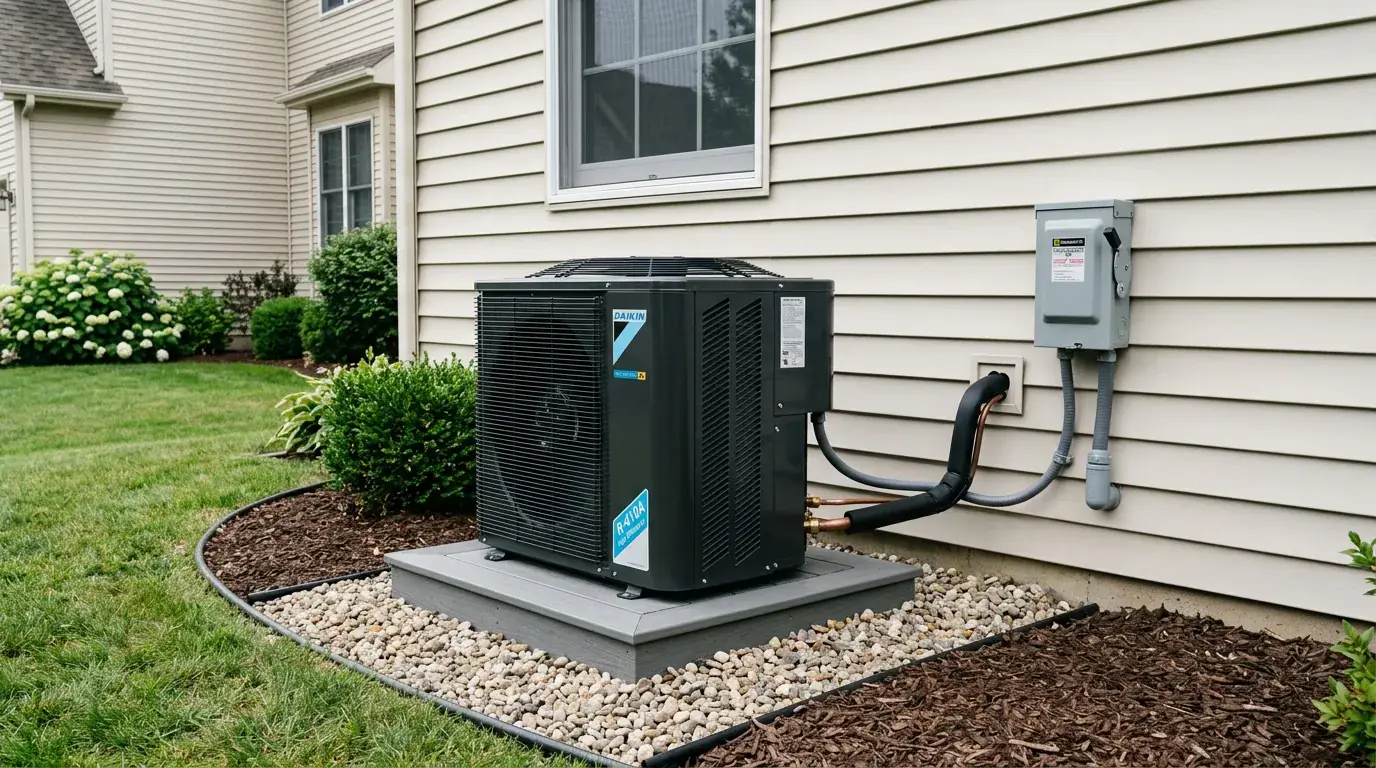
Heat pumps provide an exceptionally energy-efficient heating solution, but operating in freezing ambient temperatures requires precise calibration. If your outdoor heat pump unit is encased in solid ice, blowing cool air in heating mode, or running continuously on costly auxiliary electric heat strips, specialized troubleshooting is required. Technicians test electronic defrost control boards, check reversing valve solenoids, measure refrigerant superheat and subcooling levels, and test multi-stage scroll compressors. For property owners seeking replacement equipment, we design and install high-performance inverter heat pump systems and hybrid dual-fuel configurations that deliver robust heating capacity even during deep winter freezes.
Common Heating Symptoms Requiring Attention
Observed Issue: Outdoor heat pump unit is encased in a thick shell of solid ice.
Observed Issue: Thermostat remains locked on auxiliary or emergency heat mode.
Observed Issue: Vents blow room-temperature or chilly air during heating cycles.
Observed Issue: Loud grinding or buzzing noises emanating from outdoor compressor.
Observed Issue: Electricity bills spike dramatically during moderate winter weather.
Diagnostic Procedures & Technical Standards
Technical Protocol: Troubleshooting of four-way reversing valves and solenoid coils.
Technical Protocol: Testing of electronic defrost control sensors and timed relays.
Technical Protocol: Precise refrigerant superheat and subcooling charge verification.
Technical Protocol: Inverter compressor diagnostic analysis and ECM fan motor testing.
Technical Protocol: Dual-fuel hybrid heating integration with existing gas furnaces.
Need Immediate Troubleshooting For Heat Pump Repair & Installation?
Heating dispatchers are available to review equipment symptoms, check service coverage in your zip code, and dispatch diagnostic assistance.
Heat pumps naturally build up light frost on outdoor coils as they extract thermal energy from chilly ambient air. Systems automatically initiate a timed defrost cycle to melt this frost; however, heavy, solid block ice indicates a failed defrost control board, bad sensor, or low refrigerant.
Heat pumps supply air that feels cooler to human skin (typically 90 to 95 degrees Fahrenheit) compared to gas furnaces (120 degrees Fahrenheit). Cool supply air typically points to a reversing valve stuck in cooling mode, or auxiliary electric heat strips that have tripped.
Auxiliary heat activates automatically when outdoor temperatures drop below the system's thermal balance point, energizing electric resistance heating strips to supplement the heat pump. Selecting 'Emergency Heat' manually locks out the outdoor compressor entirely, running only the high-draw electric strips.
A failed reversing valve prevents the heat pump from switching between heating and cooling cycles. Burned-out solenoid coils or internal sliding valve body sticking causes units to blow cold air during winter or make continuous hissing sounds without transferring thermal energy.
Modern cold-climate inverter heat pumps utilize variable-speed compressors with flash vapor injection to maintain full heating capacity down to negative thirteen degrees Fahrenheit. These advanced systems eliminate reliance on costly electric backup strips in most cold climates.
A defective defrost control board cannot sense outdoor coil temperature or initiate timed defrost sequences. Consequently, moisture freezes into a solid block of ice around the outdoor cabinet, bending coil fins, crushing fan blades, and triggering high-pressure compressor lockouts.
Unlike simple air conditioners, heat pumps meter refrigerant in both flow directions using dual thermal expansion valves. Measuring exact superheat and subcooling ensures the compressor receives vapor rather than damaging liquid refrigerant during heavy winter heating loads.
Dual-fuel systems combine an electric heat pump with a high-efficiency gas furnace. The intelligent thermostat runs the efficient heat pump during mild forty-degree weather, then automatically switches over to the gas furnace when temperatures plunge below freezing for economical heating.
Request Heat Pump Repair & Installation
Speak with our technical dispatch team for prompt diagnostic scheduling and itemized heating repair estimates.
Thank you! Your Heat Pump Repair & Installation diagnostic request has been received. Our dispatch team is reviewing technician availability in your zip code.
Urgent Heating Emergency?
For immediate emergency dispatch, call our 24/7 technical line directly:
Do not let minor heating glitches turn into frozen pipes or total winter breakdowns. Speak with our dispatchers for clear pricing and prompt technical scheduling.