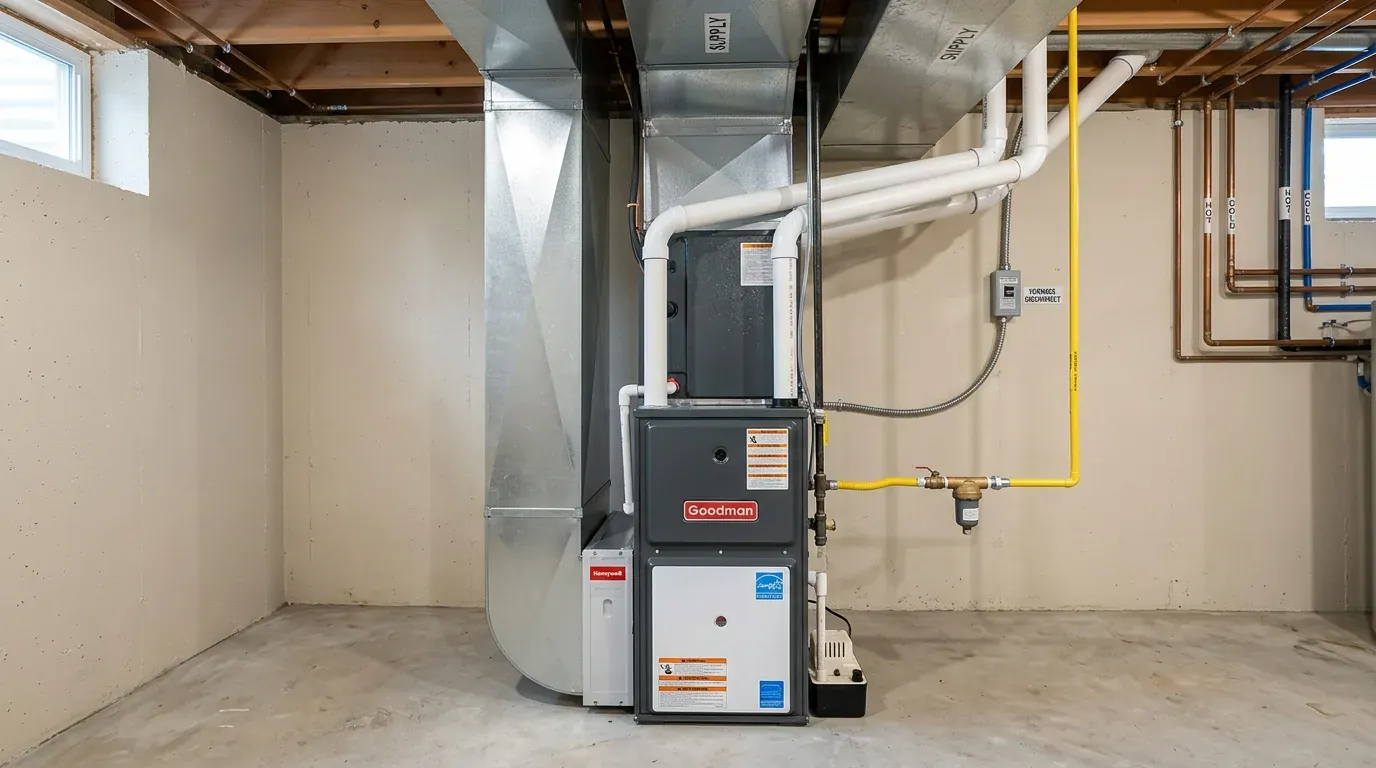
Annual preventative heating maintenance extends the operational lifespan of your furnace while keeping utility bills low and protecting your family from dangerous carbon monoxide leaks. During a comprehensive inspection, technicians vacuum burner compartments, clean oxidized flame sensor rods, and test blower motor capacitor microfarads against factory tolerances. We inspect heat exchanger cells for microscopic stress fractures, lubricate bearing assemblies, test high-limit rollout switches, and clear calcified condensate lines on high-efficiency equipment. A dynamic digital flue gas combustion analysis verifies clean fuel-to-air combustion, ensuring your heating system delivers reliable, energy-efficient warmth throughout the coldest months.
Common Heating Symptoms Requiring Attention
Observed Issue: Heating system hasn't received professional servicing in over 12 months.
Observed Issue: Dry, dusty air accompanied by a burning odor when turning on the heat.
Observed Issue: Short cycling where the furnace runs for two minutes and shuts off.
Observed Issue: Higher gas and electric utility bills compared to last winter.
Observed Issue: Rattling or whining noises originating from the blower compartment.
Diagnostic Procedures & Technical Standards
Technical Protocol: Precision flame sensor microamp cleaning and flame signal verification.
Technical Protocol: Capacitor microfarad testing against manufacturer +/- 5% tolerance.
Technical Protocol: Electronic combustion flue gas analysis measuring CO and oxygen levels.
Technical Protocol: Digital borescope inspection of heat exchanger primary and secondary cells.
Technical Protocol: Cleaning and chemical flush of condensate drain traps and discharge lines.
Need Immediate Troubleshooting For Heating Maintenance & Tune-Up?
Heating dispatchers are available to review equipment symptoms, check service coverage in your zip code, and dispatch diagnostic assistance.
Technicians measure blower motor capacitor microfarads, clean microamp flame sensors, calibrate gas manifold pressures, and test electrical safety switches. The visit also includes cleaning burner ports, vacuuming vest compartments, and inspecting heat exchangers with digital borescopes.
Flame rectification sensors generate a tiny direct current signal (typically one to five microamps) when engulfed by burner flame. Carbon oxidation on the metal rod insulates it from the flame, causing the circuit board to misinterpret normal operation as flame loss and kill the gas.
Clean burner orifices optimize fuel-to-air combustion ratios, while lubricated bearings and clean blower fan wheels reduce electrical motor drag. Restoring factory airflow specifications allows heat exchangers to transfer thermal energy efficiently without wasting natural gas.
A cracked heat exchanger allows toxic combustion byproducts—including lethal carbon monoxide—to migrate from the burner chamber into the residential breathing air stream. Borescope inspections and flue gas analysis identify microscopic hairline cracks before toxic poisoning occurs.
Standard one-inch fiberglass filters require monthly replacement during cold winter months, whereas four-inch pleated media filters usually last three to six months. Clogged filters restrict return airflow, causing heat exchangers to overheat and trip primary high-limit safety controls.
Most major HVAC equipment manufacturers require documented annual preventative maintenance by a licensed professional as a condition of their multi-year parts warranties. Neglecting routine maintenance can result in denied warranty claims if major components like compressors or heat exchangers fail.
Electronic combustion analyzers measure flue gas temperatures, oxygen concentrations, carbon dioxide percentages, and parts-per-million carbon monoxide levels. These readings reveal incomplete combustion, draft deficiencies, or improper gas-to-air mixtures invisible to the naked eye.
High-efficiency condensing furnaces produce gallons of mildly acidic water daily. Calcified sediment and algae can clog the trap, causing water to back up into the secondary heat exchanger and trip float safety switches, leaving your home with no heat.
Request Heating Maintenance & Tune-Up
Speak with our technical dispatch team for prompt diagnostic scheduling and itemized heating repair estimates.
Thank you! Your Heating Maintenance & Tune-Up diagnostic request has been received. Our dispatch team is reviewing technician availability in your zip code.
Urgent Heating Emergency?
For immediate emergency dispatch, call our 24/7 technical line directly:
Do not let minor heating glitches turn into frozen pipes or total winter breakdowns. Speak with our dispatchers for clear pricing and prompt technical scheduling.