Furnace Repair in Prairie Home, NE
Frigid winter drafts make malfunctioning heating systems an immediate emergency. Experienced heating technicians troubleshoot cycling limit switches, unresponsive thermostats, faulty gas valves, and cracked igniters in Prairie Home to restore household comfort.
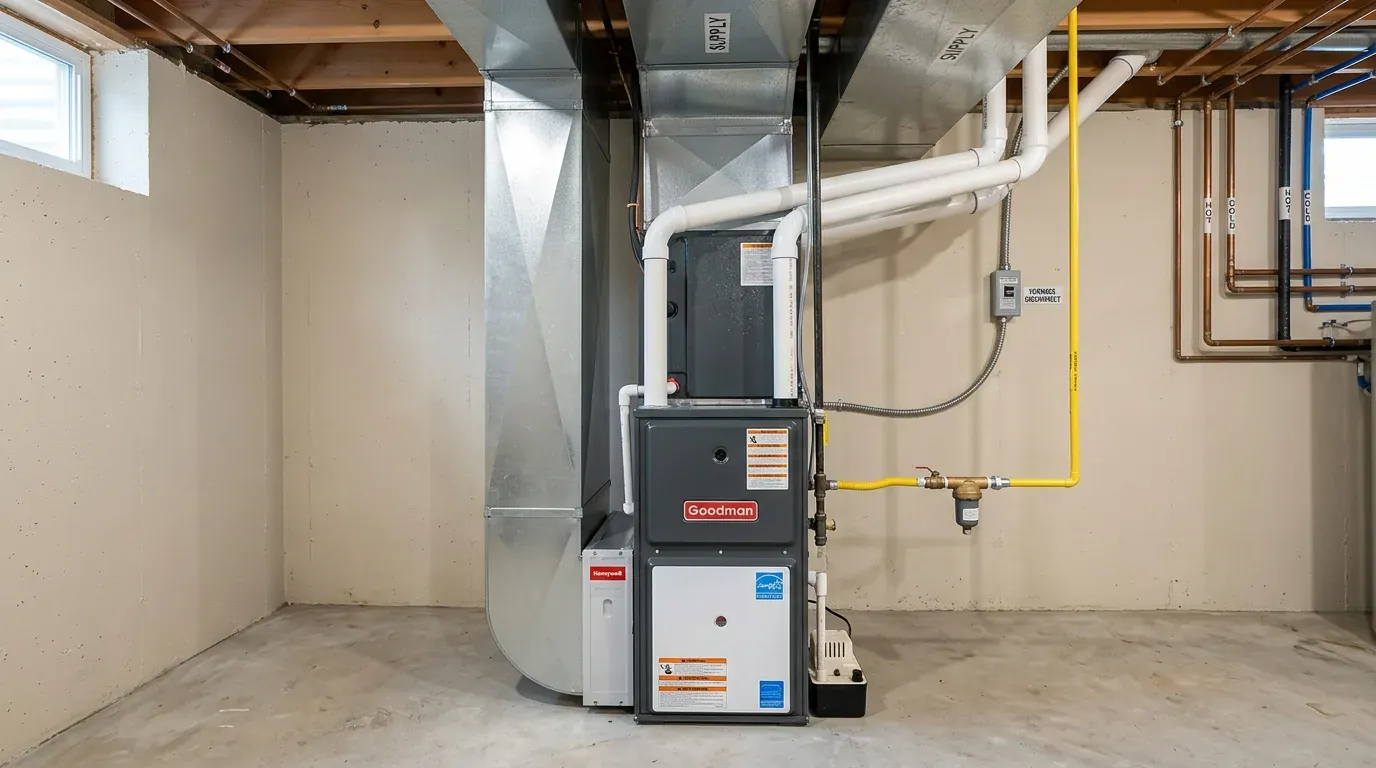
Emergency Furnace Repair in Prairie Home
Deciding between costly mechanical repairs and complete heating system replacement is a common dilemma for property owners managing older heating systems in Prairie Home. Furnaces older than fifteen years frequently suffer compounded component failures, where an igniter failure is followed closely by a leaking gas valve or cracked inducer housing. Evaluating total system condition prevents pouring expensive repair dollars into obsolete machinery.
Replacing an outdated eighty-percent AFUE furnace with a modern variable-capacity multi-stage unit eliminates loud duct banging, drastically lowers monthly winter heating expenditures, and provides whisper-quiet airflow. Heating engineers perform complete ACCA Manual J load calculations, analyzing insulation values, window exposure, and regional climate data to size the replacement equipment with mathematical precision.
Every installation across Prairie Home is planned to integrate smoothly with existing duct infrastructure, electrical service panels, and programmable smart thermostats. Homeowners gain dependable, energy-efficient heating backed by full manufacturer equipment warranties, ensuring reliable winter warmth for decades to come while eliminating the anxiety of unexpected mid-winter heating breakdowns.
Heating & Furnace Services in Prairie Home
- Emergency Furnace Repair: Rapid diagnostic troubleshooting, safety switch testing, and immediate mechanical repairs for sudden furnace lockouts and no-heat emergencies.
- Furnace Replacement & Installation: Engineered Manual J load sizing and precision installation of high-efficiency gas, electric, and condensing furnaces built for your home.
- Heating Maintenance & Tune-Up: Multi-point seasonal safety inspections, flame sensor cleaning, burner calibration, and digital combustion efficiency testing to prevent winter breakdowns.
- Heat Pump Repair & Installation: Complete diagnostic troubleshooting, defrost board repair, reversing valve service, and dual-fuel system installations for year-round heating efficiency.
- Boiler Repair & Heating Service: Specialized hydronic diagnostic service, zone valve replacement, circulator pump repairs, and baseboard radiator heating maintenance for residential boilers.
- Commercial Heating & HVAC Services: Rooftop packaged unit maintenance, commercial furnace diagnostics, and planned preventative heating service contracts tailored for local commercial facilities.
Diagnostic & Repair Workflow
Upgrading to a new furnace or heat pump begins with an in-depth home evaluation rather than guesswork in Prairie Home. An engineering specialist performs a room-by-room ACCA Manual J load calculation, accounting for square footage, window thermal performance, attic insulation depth, and regional winter design temperatures to establish exact heating BTU requirements.
On installation day, the mechanical team safely removes the old heating unit, modifies supply and return sheet metal transitions for optimal airflow, and installs the new high-efficiency system. After connecting gas, electrical, and venting lines, the crew conducts a complete commissioning protocol, testing static pressure and temperature rise to guarantee optimal performance.
What Prairie Home Homeowners & Managers Say
"Loud metallic screeching started every time the heat called, making us fear the furnace was about to explode. The technician lubricated the motor assembly, replaced a worn blower wheel belt, and aligned the pulleys so the unit runs whisper-quiet again."
"Replacing our noisy, sixty-percent efficiency clunker with a 96% AFUE condensing unit dropped our winter heating bills noticeably. The installation crew completed the load calculations, ran the twin PVC exhaust pipes neatly, and hauled away the old iron beast."
"The annual autumn safety inspection literally saved our household from danger. The technician discovered a hairline crack along the primary heat exchanger cell using an inspection scope, showing us the soot traces where carbon monoxide could have infiltrated our bedrooms."
Heating Coverage Across Prairie Home, NE
Heating & Furnace FAQs in Prairie Home
Restore Warmth in Your Prairie Home Home
Cold air blowing from your vents signals underlying mechanical or electrical furnace stress. Speak with our dispatchers for timely troubleshooting and clear pricing.