Furnace Repair in Missouri Valley, IA
Frigid winter drafts make malfunctioning heating systems an immediate emergency. Experienced heating technicians troubleshoot cycling limit switches, unresponsive thermostats, faulty gas valves, and cracked igniters in Missouri Valley to restore household comfort.
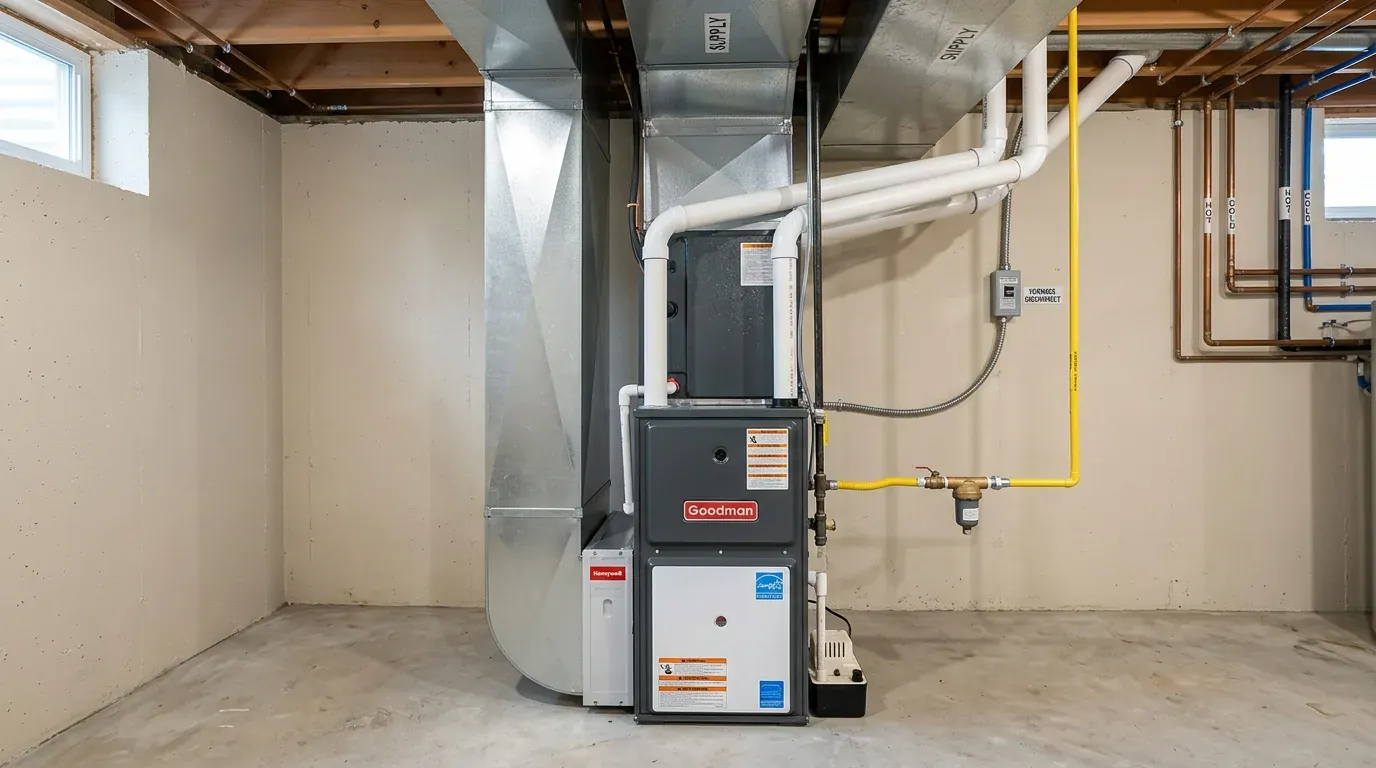
Residential Furnace Repair in Missouri Valley
Sudden spikes in monthly utility bills coupled with lukewarm register airflow often signal that a heat pump system is struggling against cold weather in Missouri Valley. Heat pumps extract ambient thermal energy from outdoor air, but when freezing rain or sub-freezing temperatures coat the outdoor coil in thick frost, the reversing valve and defrost control board must cycle properly to melt the ice barrier.
Failed defrost sensors or stuck reversing valves force the heating system to rely continuously on auxiliary electric resistance heat strips, which consume up to four times more electricity than normal compressor operation. Technicians test refrigerant superheat and subcooling levels, inspect dual-run capacitors, and verify that auxiliary heat stages stage on only during extreme outdoor design temperatures rather than running non-stop.
Properly calibrated controls keep dual-fuel and heat pump equipment running at peak seasonal efficiency throughout fluctuating Missouri Valley winter weather patterns. Expert adjustments ensure seamless transitions between heat pump compression and auxiliary furnace heating, keeping indoor temperatures steady without punishing electric meter surges, protecting the lifespan of the outdoor compressor.
Heating & Furnace Services in Missouri Valley
- Emergency Furnace Repair: Rapid diagnostic troubleshooting, safety switch testing, and immediate mechanical repairs for sudden furnace lockouts and no-heat emergencies.
- Furnace Replacement & Installation: Engineered Manual J load sizing and precision installation of high-efficiency gas, electric, and condensing furnaces built for your home.
- Heating Maintenance & Tune-Up: Multi-point seasonal safety inspections, flame sensor cleaning, burner calibration, and digital combustion efficiency testing to prevent winter breakdowns.
- Heat Pump Repair & Installation: Complete diagnostic troubleshooting, defrost board repair, reversing valve service, and dual-fuel system installations for year-round heating efficiency.
- Boiler Repair & Heating Service: Specialized hydronic diagnostic service, zone valve replacement, circulator pump repairs, and baseboard radiator heating maintenance for residential boilers.
- Commercial Heating & HVAC Services: Rooftop packaged unit maintenance, commercial furnace diagnostics, and planned preventative heating service contracts tailored for local commercial facilities.
Diagnostic & Repair Workflow
Upgrading to a new furnace or heat pump begins with an in-depth home evaluation rather than guesswork in Missouri Valley. An engineering specialist performs a room-by-room ACCA Manual J load calculation, accounting for square footage, window thermal performance, attic insulation depth, and regional winter design temperatures to establish exact heating BTU requirements.
On installation day, the mechanical team safely removes the old heating unit, modifies supply and return sheet metal transitions for optimal airflow, and installs the new high-efficiency system. After connecting gas, electrical, and venting lines, the crew conducts a complete commissioning protocol, testing static pressure and temperature rise to guarantee optimal performance.
What Missouri Valley Homeowners & Managers Say
"Ice buildup completely encased our outdoor heat pump compressor after an overnight freezing rain storm. The service specialist replaced a shorted defrost control board and ambient sensor, restoring automatic defrost cycles so our home stayed warm."
"Replacing our noisy, sixty-percent efficiency clunker with a 96% AFUE condensing unit dropped our winter heating bills noticeably. The installation crew completed the load calculations, ran the twin PVC exhaust pipes neatly, and hauled away the old iron beast."
"Our twenty-year-old furnace kept cutting out after running for barely two minutes. The specialist tested static pressure, identified a heavily oxidized flame sensor, cleaned the rod with emery cloth, and confirmed proper combustion without pushing unnecessary hardware replacements."
Heating Coverage Across Missouri Valley, IA
Heating & Furnace FAQs in Missouri Valley
Nearby Heating Service in Harrison County
Restore Warmth in Your Missouri Valley Home
Cold air blowing from your vents signals underlying mechanical or electrical furnace stress. Speak with our dispatchers for timely troubleshooting and clear pricing.